

The Moment
Every few months someone pops up to declare, dramatically, that Donald Trump “broke” American journalism. This week, political commentator Mark Halperin stepped forward with a different spin: Trump didn’t break the press, he exposed it.
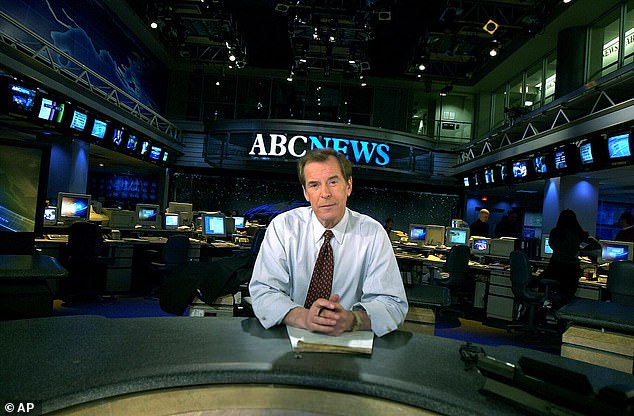
In a new essay, Halperin looks back at what he says legendary anchorman Peter Jennings taught him about the “news racket” – tell great stories, hold the powerful accountable – and then argues that today’s newsrooms have traded those basics for tribal cheering sections.
His core claim: Trump is the biggest, most durable story in modern politics, yet coverage of him has become shrill, joyless, and hopelessly partisan. Facts now arrive after the hashtags, and any attempt at nuance gets treated like contraband.
Halperin even points to renewed attention on Trump’s past social ties to the late financier and convicted sex offender Jeffrey Epstein as a prime example of how fast the conversation jumps from “What actually happened?” to “Whose side are you on?”
On paper, it’s a sharp critique that a lot of exhausted viewers over 40 will recognize instantly. But here’s the twist the essay mostly glides past: Mark Halperin himself is hardly a neutral hall monitor of media ethics.
What Peter Jennings taught me about the news business — and how it applies to the challenges of covering Donald Trump, including around the Epstein story…
My latest column for @DailyMail https://t.co/o9Zwx4NmLp pic.twitter.com/hEfq991yYB
— Mark Halperin (@MarkHalperin) December 26, 2025
The Take
I’ll say the quiet part out loud: the message mostly tracks. The messenger is…complicated.
Let’s start with the part Halperin gets right. If you grew up with Peter Jennings on in the background while someone made dinner, you remember a very specific vibe: a calm man in a good suit telling you what happened, not how to feel about it. There was a hierarchy of drama. A war led. A celebrity divorce did not. And no one screamed.
Fast-forward to now and the nightly news has turned into a 24/7 group chat that never mutes itself. As Halperin notes, too much Trump coverage is either breathless outrage theater or worshipful merch table. There’s very little in between.
Think of journalism like a thermostat. Jennings’s generation tried to keep the house somewhere near room temperature – cooler when the country ran hot, warmer when panic set in. Today’s media ecosystem has the thermostat ripped off the wall and the system stuck on “maximum blast.” Outrage drives ratings, and ratings pay the bills.
Halperin’s most useful point is that Trump didn’t invent that dynamic; he supercharged what was already there. According to a major national poll in 2023, only about a third of Americans say they trust the mass media to report the news fully and fairly. That erosion started long before the gold escalator moment.

But let’s talk about the man doing the lecturing. In 2017, multiple women came forward accusing Halperin of sexual harassment during his earlier career in political media. He publicly apologized and acknowledged inappropriate behavior, and he lost high-profile television and book deals as a result, according to several contemporaneous investigative reports. There were no criminal charges reported, but his public reputation took a major hit.
So when he waxes nostalgic about an era of firm rules and real accountability, it’s hard not to notice that he also benefited from a system that often protected powerful men until the cultural tide turned.
That doesn’t automatically make his media criticism wrong. It does mean readers are allowed to ask: is this a genuine post-scandal reckoning with a broken industry, or a way to slip back into the role of Trusted Wise Man without fully sitting in what happened?
There’s also the elephant in the newsroom nobody wants to admit: audiences changed too. We moved from three anchors to three million feeds. People now curate their own reality, and many like their news as a weapon, not a window. Jennings’s model of “compelling but calm” storytelling is competing with algorithmic rage bait. Guess who usually wins?
Where Halperin is strongest is in naming the pattern: stories about Trump, Epstein, elections, you name it, get treated less like puzzles to solve and more like loyalty tests. The story’s value is measured by how well it humiliates the other side. That is not journalism; that’s content.
Where he’s weakest is in underplaying how much people inside the media industry – including him, once upon a time – helped build the very circus he’s now criticizing.
Receipts
Confirmed:
- Peter Jennings anchored a major network’s flagship evening newscast for over two decades until his death in 2005, and was widely described in his own network’s biography as committed to serious, global reporting (biographical materials, 2005).
- Recent national polling shows public trust in mainstream news at historically low levels, with only around one-third of Americans expressing significant trust (national opinion poll on media trust, 2023).
- In 2017, multiple women accused Mark Halperin of sexual harassment related to his earlier political media work; he issued public apologies acknowledging inappropriate behavior and subsequently lost major television and publishing deals (multiple investigative reports and Halperin statements, 2017).
- Donald Trump has been publicly linked socially to Jeffrey Epstein in past years, including being photographed with him and acknowledging that he knew him, while denying any involvement in Epstein’s crimes (archival video and photographs, 1990s-2010s).
- Halperin currently hosts a video podcast and leads an interactive live video platform, positioning himself as a media analyst and political commentator (platform and podcast descriptions, 2024).
Unverified / Opinion:
- The idea that “Trump exposed journalism” rather than damaged it is Halperin’s framing and an opinion, not an established fact.
- Any judgment about whether newsrooms consciously “traded independence for applause” is interpretive commentary, not a documented decision.
- Questions about Halperin’s motivations in writing about media ethics involve speculation about intent and should be treated as opinion.
Backstory (For Casual Readers)
For anyone who only half-remembers the names: Peter Jennings was one of the big three American network anchors from the 1980s through the early 2000s, known for his foreign reporting and calm delivery. Mark Halperin rose to prominence as a political reporter and television analyst, especially known for campaign coverage. His career derailed after multiple women accused him of sexual harassment in 2017, allegations he apologized for while disputing some details. Meanwhile, Donald Trump’s long, tangled relationship with the media – first as a New York tabloid fixture, later as president – has turned coverage of him into a never-ending stress test for modern journalism.
What’s Next
We’re heading into another high-stakes election season with trust in media dragging along the bottom. Commentaries like Halperin’s will keep coming, because everyone inside the industry can feel that something fundamental has snapped.
The Jennings-style model of journalism – sober, global, a little boring on purpose – is having a quiet nostalgia boom. You see it in the way people trade old clips of anchors calmly handling national crises, or complain that every breaking-news alert now feels like an anxiety attack.
The real test isn’t whether pundits scold the press harder. It’s whether news organizations, big and small, can resist turning every Trump or Epstein-related headline into a tribal loyalty test and instead do the slow, unglamorous work Jennings preached: get the facts, explain them clearly, and hold all powerful players to the same standard.
Audiences have a role too. We can demand better, click less on the rage bait, and reward the outlets and voices that still try to keep the thermostat somewhere near “human.”
Sources: Network biography of Peter Jennings (August 2005); national public-opinion poll on U.S. media trust (October 2023); multiple investigative reports and public statements regarding Mark Halperin (October-November 2017); archival photos and video of Donald Trump and Jeffrey Epstein (1990s-2010s); current platform and podcast descriptions for Mark Halperin (accessed 2024).
Your turn: Do you actually miss the old Jennings-style “just the facts” news, or has the loud, opinionated era changed your expectations for good?











































































Comments