


He can quibble over wording; the record is sturdier. Paltrow went on the record years ago. Brad Pitt later publicly backed her version. And Weinstein’s legal reality, one California conviction standing, a New York do-over after a procedural reversal, doesn’t exactly scream “nothing.”
The Moment
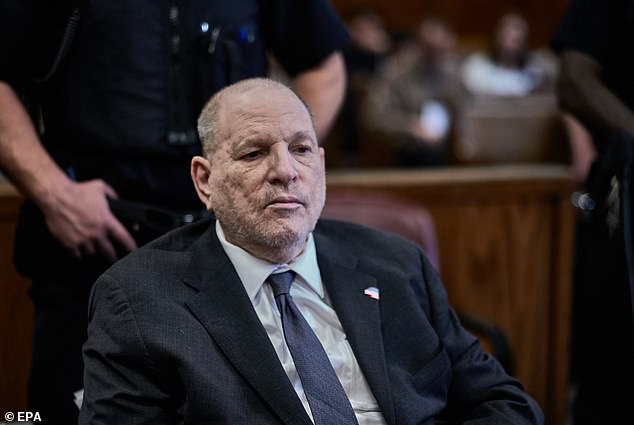
In a jailhouse interview published this week by an entertainment trade outlet, Weinstein is quoted as minimizing Paltrow’s allegation, contending she exaggerated after a mid-’90s meeting in a Beverly Hills hotel. He also frames her as a friend who “owed” him, language that now lands differently given our clearer picture of how power actually worked in that era.
Paltrow, now 53, first alleged that at 22 she was asked for a massage by Weinstein after a business meeting at the Peninsula Beverly Hills; she said she rejected him and later told then-boyfriend Brad Pitt. Years later, on a nationally broadcast interview, Paltrow recounted that Pitt confronted Weinstein in 1995 and warned him not to make her uncomfortable again.
Weinstein has long maintained he did nothing nonconsensual. He is in custody on a California sentence while New York prosecutors pursue a retrial after the state’s high court overturned his 2020 Manhattan conviction on procedural grounds. None of that erases what’s already on paper in Los Angeles, or what’s on tape about that 1995 confrontation.
“Big deal over nothing” is the gaslighter’s lullaby. The culture’s awake now.
The Take
Let’s separate spin from spine. The spin is nostalgia for an era when a studio boss could recast an employee’s discomfort as a misunderstanding-and expect the town to nod along. The spine is the timeline: an on-record allegation, a boyfriend’s public retelling of his own confrontation, and court decisions that have moved at a painstaking, sober pace.
Weinstein pitching “she owed me” is like an old studio contract trying to pass as consent. Mentorship gets you a thank-you in an Oscar speech; it doesn’t buy access to someone’s body or silence about boundaries. And minimizing an incident, especially when the ask happened in a private hotel setting, reads like a strategy, not a memory.
Here’s the cultural part: The MeToo era didn’t freeze time in 2017; it matured it. We learned to hold two thoughts at once. Yes, due process matters-New York’s procedural reversal proves the rules apply even to the reviled. And yes, women’s accounts of uncomfortable, pressurized “asks” at work were not hysterics; they were the quiet architecture of power’s operation. Dismissing that as “nothing” is like calling an iceberg a chilly inconvenience.
Receipts
Confirmed
- Paltrow has been on the record since 2017 alleging that, at 22, she was asked for a massage by Weinstein after a business meeting at a Beverly Hills hotel; she said she refused and informed Brad Pitt shortly after (2017 investigative report; on-record statements).
- Paltrow later told a nationally broadcast radio interview in 2018 that Pitt confronted Weinstein in 1995, warning him not to make her uncomfortable; the key quote has been widely rebroadcast from that appearance (2018 interview audio).
- Weinstein was convicted in Los Angeles in 2022 of sex crimes and sentenced to 16 years in 2023; that conviction stands (Los Angeles court records, 2022-2023).
- New York’s highest court overturned Weinstein’s 2020 Manhattan conviction in April 2024 on procedural grounds; prosecutors have moved toward a retrial, and Weinstein has been held in New York custody for related proceedings (New York Court of Appeals decision, 2024; subsequent docket activity).
Reported/Unverified
- Weinstein’s new claim that Paltrow “made a big deal over nothing,” and that she “owed” him, comes from a jailhouse interview published this week by an industry trade outlet; an independent transcript or audio was not immediately available at press time. Representatives for Paltrow and Pitt had not publicly responded as of publication.
Backstory (For the Casual Reader)
Once the co-founder of Miramax and later The Weinstein Company, Harvey Weinstein wielded enormous influence over 1990s and 2000s prestige film. In 2017, dozens of women, among them Gwyneth Paltrow, came forward with allegations of harassment and assault, accelerating the broader MeToo reckoning around workplace power and consent. He was later convicted in separate cases on opposite coasts; while New York’s initial conviction was vacated on procedural grounds in 2024, California’s 16-year sentence remains in effect. Through it all, Weinstein has denied nonconsensual conduct. The public and the courts have been sorting out the difference among power, access, and consent ever since.
When a powerful figure reframes a boundary violation as “nothing,” does engaging with that minimization help set the record straight, or simply hand the mic back to the past?
- New York Court of Appeals, decision vacating 2020 Manhattan conviction (April 25, 2024).
- Los Angeles Superior Court, People v. Weinstein, jury verdict (December 19, 2022) and sentencing minute order (February 23, 2023).
- The Howard Stern Show, Gwyneth Paltrow interview discussing Brad Pitt’s 1995 confrontation (May 23, 2018).
- On-record jailhouse interview with Weinstein published by an entertainment trade outlet (March 10, 2026).
- 2017 investigative report, including Paltrow’s on-record allegation (October 10, 2017).






































































Comments