

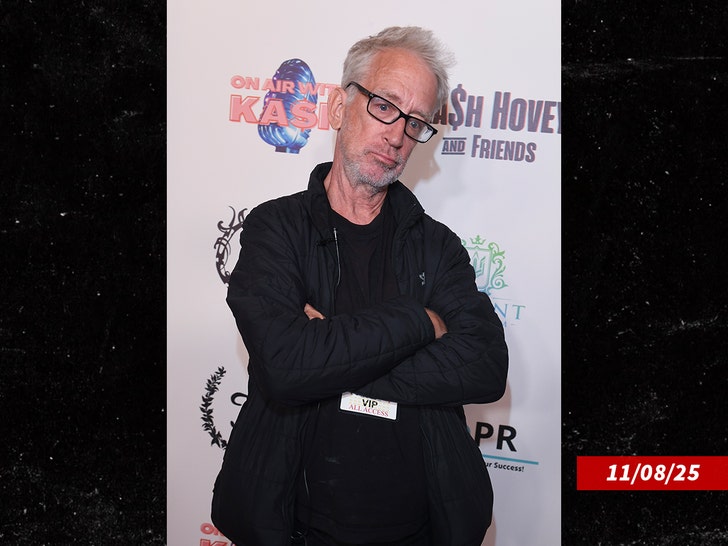
The Moment
Comedian Andy Dick, who’s been in the public eye since the 1990s, is back in the headlines for all the wrong reasons – and this time, he’s insisting he doesn’t want help.
Earlier this week, he suffered what he himself later described as a drug overdose after smoking crack cocaine on the streets of Hollywood. Video from a celebrity news outlet showed friends frantically trying to revive him on the sidewalk.
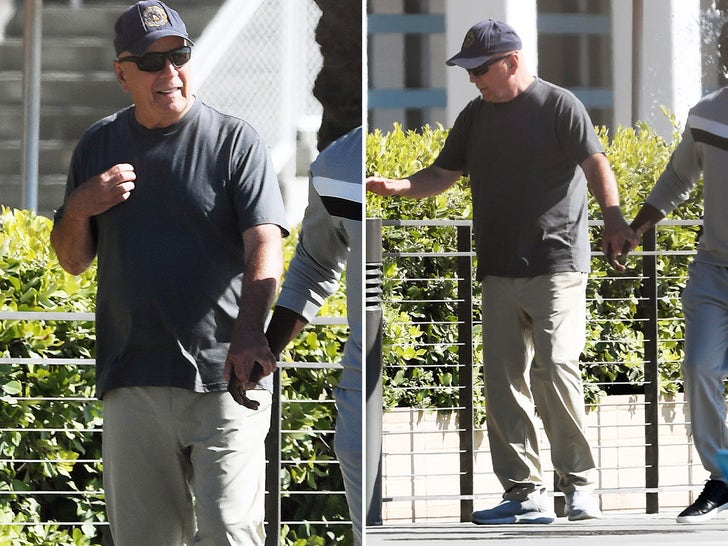
Fast-forward to the next day: a photographer from that same outlet is in Andy’s Los Angeles home, cameras rolling. He looks calmer, more composed, and very clear on one thing: he is not going to rehab.

In the filmed conversation, Andy tosses the idea of rehab around with his buddies and then with the crew – almost like he’s workshopping a punchline – before landing on a firm “no.” What he says he needs instead is to stay close to his “real friends,” two of whom are right there with him, clearly taking on caretaker duty.
Those friends admit on camera that they didn’t sign up to be full-time watchdogs but here they are. One small bright spot: Andy and his circle say actor Edward Furlong – yes, the kid from “Terminator 2,” now a middle-aged man with his own recovery story – reached out to check on him after hearing about the overdose.
The Take
I keep circling back to this: we just watched a man who nearly died in the street treat the word “rehab” like a rhetorical exercise.
On one level, Andy Dick saying he won’t go to rehab is sadly on-brand. He’s long been the guy who turns chaos into content – the outrageous talk-show guest, the unpredictable club act, the walking cautionary tale. When your persona is the train wreck, it’s hard to slam the brakes on camera and suddenly play the role of “model patient.”
But this moment hits differently, maybe because the stakes feel painfully obvious. The footage of his friends reviving him isn’t slapstick; it’s the kind of clip most families pray never goes online. Then, less than 24 hours later, he’s sitting in his living room treating addiction treatment like it’s a bad career move instead of a possible lifeline.
We also need to talk about those friends. They clearly care about him – you can see it in the way they hover, the way they answer questions he dodges. But they also look stunned, maybe a little trapped. It’s the classic dynamic: one person is drowning, and the life raft has started to sink too.
Culturally, we love the big “rehab reveal” arc. The statement, the facility name, the tearful comeback interview. Here, Andy’s giving us the anti-arc: overdose, then defiance. No redemption tour, no solemn promise. Just: “I’m fine, I’ve got my buddies.” It’s like watching someone walk away from a burning car insisting they don’t need a ride home.
And honestly, it raises a harder question for all of us who grew up watching him on sitcoms: How many times do we consume a public spiral before we admit we’re part of the audience that keeps the spiral profitable? He’s not just a man in trouble; he’s a brand built on being in trouble.
Ultimately, Andy Dick gets to decide what treatment he does or doesn’t accept. Personal autonomy matters. But autonomy doesn’t erase reality: crack, overdose, public collapse – those aren’t just colorful anecdotes. They’re red flags big enough to be seen from space.
Receipts
Confirmed
- According to a video interview posted December 11, 2025 by a celebrity news outlet, Andy Dick said he suffered a drug overdose after smoking crack cocaine.
- In the same filmed visit to his Los Angeles home, he stated that he is not going to rehab, after discussing the idea with his friends on camera.
- Video from earlier in the week, circulated by that outlet, shows his friends attempting to revive him on a Hollywood street after the apparent overdose.
- Andy is shown with two close friends, who say they did not expect to be taking on such an intense caretaking role.
- Andy and his friends say that actor Edward Furlong called to check in on him following news of the overdose.
Unverified / Contextual
- We don’t know whether any medical professionals have recommended rehab or other treatment options to Andy privately; that has not been reported.
- We also don’t know what, if any, long-term plan his friends have for setting boundaries or support around his substance use.
- Public arrest records and long-running entertainment coverage over the 2000s and 2010s document prior legal and substance-related troubles, but the specifics of his current condition beyond what he says on camera remain private.
Sources: On-camera interview and street footage released by a celebrity news outlet on December 9 and 11, 2025; publicly available arrest and court records from the 2000s-2020s.
Backstory (For Casual Readers)
If you mainly remember Andy Dick as the quirky guy from 1990s sitcoms like “NewsRadio,” here’s the short version. He parlayed that success into stand-up, sketch work, and a long list of talk-show and reality-TV appearances. Along the way, his offstage life – drinking, drugs, unpredictable behavior, and a string of arrests – became as famous as his comedy. Over the years, he’s spoken in interviews about trying to get sober, but he’s also been repeatedly photographed and reported on in obviously unstable moments. For many viewers in their 40s, 50s, and 60s, he’s gone from “that oddball comic” to “that guy who just can’t seem to get it together.”
What’s Next
So where does this go from here?
In the immediate term, Andy seems to be betting everything on his friends – not doctors, not structured treatment. If history is any guide, that usually ends one of two ways: either the friends finally draw firm boundaries, or they burn out completely and the person in crisis is left with even fewer lifelines.
What to watch for now:
- Public statements from Andy in the coming weeks – does he double down on the no-rehab stance, quietly seek help off-camera, or lean further into the chaos-as-content version of himself?
- Support from peers like Edward Furlong and other performers who’ve been through addiction and recovery. Sometimes the people who get through to you aren’t family or fans, but colleagues who know exactly what the spiral feels like.
- Less footage, not more. In a kinder world, the next step wouldn’t be another viral clip – it would be a pause in the spectacle while he figures out what he wants his life to look like at 60 and beyond.
There’s a point where “that wild comedian” stops being a colorful archetype and starts being someone’s very real tragedy-in-progress. Andy Dick may not be ready to walk into rehab, but the rest of us can at least stop treating his lowest moments like casual entertainment.
Your turn: When a celebrity clearly needs help but says “no” on camera, do you think outlets and audiences should back away – or keep watching in the hope that public pressure might finally push them toward real treatment?




























































Comments