

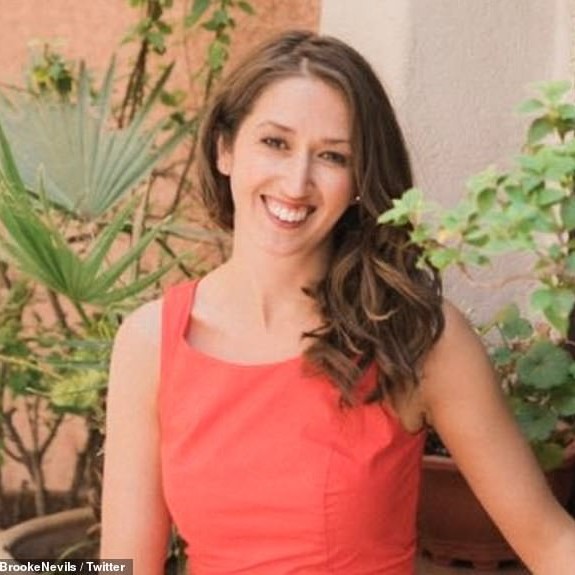
A onetime junior staffer says four casual words from a TV kingpin felt like a loaded weapon – and yes, it tells us a lot about power, memory, and who gets believed.
Brooke Nevils is done being a footnote in someone else’s downfall. With her new book, she’s putting her version of the Matt Lauer story in permanent ink – including the last time she says she ever saw him, when he walked past her with a grin and said, “Weren’t you in Sochi?”
To outsiders, that’s office small talk. To Nevils, those four words were a trigger pulled by the man she alleges raped her in 2014 – a man who still insists everything was consensual and who, by the way, reportedly thinks he deserves a comeback tour.
The Moment
According to Nevils’ new memoir, Unspeakable Things: Silence, Shame, and the Stories We Choose to Believe, the encounter happened two years after the alleged assault in Sochi, where she’d worked as a 29-year-old assistant on NBC’s Winter Olympics coverage, and Lauer was the network’s $25 million-a-year star.
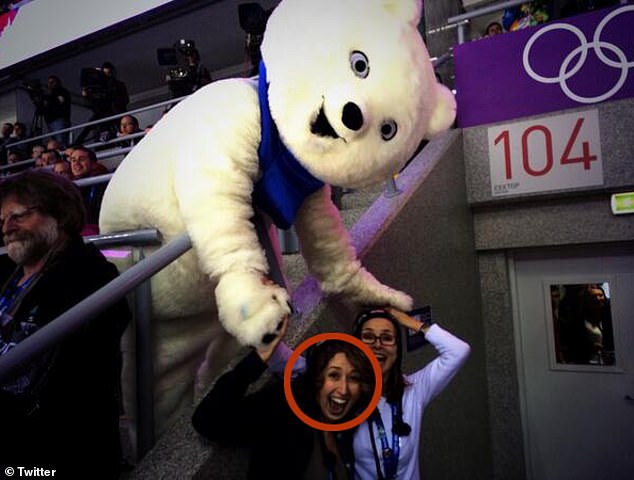
She writes that she was producing a documentary and assigned to record Lauer’s voiceovers. By then, she believed she’d gotten tougher, less intimidated by the man she says had once left her bleeding and struggling to walk. They did the session, business as usual.
Then, she says, as he left the booth, he stopped, flashed what she calls a “ghoulish” grin, and asked: “Weren’t you in Sochi?” In her telling, those four words sent her straight back into a “bottomless well of shame, humiliation, and self-loathing.”
To everyone else, it’s a throwaway line. To her, it’s a reminder that the powerful man in the room remembers exactly what you’re trying to forget.
Nevils says that was the last time she saw Lauer in person. It would be another stretch of silence – and a devastating personal loss – before she finally reported him to NBC as the #MeToo movement gained momentum.
The Take
There are really two stories here: what allegedly happened in Sochi, and what it takes for a woman in a lopsided power dynamic to speak up about it years later.
The first story is painfully familiar by now: a much older, wildly powerful man; a much younger, junior employee; alcohol; a hotel room; an alleged assault the man insists was consensual. Lauer has repeatedly denied any criminal wrongdoing and has never been charged.
The second story is where Nevils’ book lands – and where it stings. She describes drowning her trauma in alcohol and pills, blaming herself, and even continuing to see Lauer for sex afterward. That choice has been used to question her, but anyone who’s listened to survivors knows that staying close to the scene of the harm is, tragically, not unusual. It’s part coping mechanism, part career calculation, part pure survival.
The Sochi quip matters because it reads like a test of reality. Was he cluelessly making small talk about a work trip? Or was this, as she fears, a calculated reminder that he holds the power – over the memory, over the narrative, over her?
Nevils says we’ll never know what was in his head. But honestly, that’s the point. In workplaces built around celebrity, the star rarely has to explain himself. The junior staffer does.
Her account of what finally pushed her to report him – her mother’s sudden death in 2017, a folder of letters and poems her mom left behind, and the realization that she could finally afford to lose a job if she spoke up – is a brutal reminder of how expensive honesty can be. Financially. Emotionally. Socially.
Meanwhile, reports that Lauer has been quietly floating the idea of a comeback raise a different question: Who do we rush to reinstate, and who do we quietly forget? We live in a culture that gives very public men a well-funded second act, and gives the women who accused them… a book deal if they’re lucky and a lifetime of online doubt if they’re not.

Call it what you want – redemption arc, PR rehab, “time served.” But if someone is knocking on the door of public life again, it’s not unreasonable for the woman at the center of the story to say, “Here’s everything I remember. You decide what to do with it.”
Receipts
Confirmed
- Nevils’ detailed account of the alleged Sochi assault, her subsequent encounters with Lauer, and the “Weren’t you in Sochi?” comment appear in her memoir Unspeakable Things: Silence, Shame, and the Stories We Choose to Believe, published by Viking (Penguin Random House) in 2026.
- According to NBC’s on-air coverage on November 29, 2017, the network fired Matt Lauer after receiving a complaint of inappropriate sexual behavior in the workplace.
- In a written statement released the same day and read on-air, Lauer said that while “some of what is being said about me is untrue or mischaracterized,” there was “enough truth in these stories to make me feel embarrassed and ashamed,” and he apologized to those he hurt.
- Journalist Ronan Farrow’s 2019 book Catch and Kill includes Nevils’ earlier account of the alleged Sochi assault and NBC’s handling of her complaint.
Reported / Unconfirmed
- Nevils’ interpretation of Lauer’s Sochi comment as “ghoulish” and calculated is her personal reading of his intent; Lauer has not publicly commented on that specific interaction.
- Reports that Lauer has been exploring a return to media – networking with former colleagues and seeking a new role – come from unnamed sources quoted in entertainment and news coverage; no official new project has been announced.
Backstory (For the Casual Reader)
For anyone who only half-followed this the first time: Matt Lauer was the longtime co-host of NBC’s Today show and, for years, one of the most powerful people in morning television. In 2017, as #MeToo stories were erupting across industries, NBC abruptly fired him after a complaint from Brooke Nevils, then a former staffer, who said he had raped her during the 2014 Sochi Olympics. Lauer has consistently denied the allegation and said the encounter was consensual, and he has not faced criminal charges.

Nevils’ identity and allegations first became widely known in 2019, when they were detailed in Ronan Farrow’s reporting and book. Lauer pushed back publicly, accusing the coverage of omitting key facts and again insisting on his version of events. Since then, he’s stayed mostly out of sight, apart from periodic reports that he’s gauging interest in a comeback. Nevils, now in her early 40s, is using her own book to reclaim the narrative – not just about what allegedly happened in Sochi, but about what it costs to speak up when the man across from you spent decades being treated like America’s breakfast companion.
What do you think? When a powerful public figure eyes a return after serious, disputed allegations, how much weight should we give to new, detailed accounts like Nevils’ in deciding whether we’re ready to welcome him back?
Sources: Brooke Nevils, Unspeakable Things: Silence, Shame, and the Stories We Choose to Believe (Viking, 2026); Ronan Farrow, Catch and Kill (Little, Brown, 2019); NBC News broadcast and Lauer statement, November 29, 2017; subsequent news reporting on Lauer’s post-2017 career prospects.









































































Comments