

A TV star in a white suit, a church protest, a federal arrest, and a mayor warning every reporter in America to watch their back – welcome to 2026.
Don Lemon didn’t just stroll out of court; he walked straight into a national argument about what it means to be a journalist in a protest zone.
Released without bail after a high-profile arrest tied to a church demonstration in Minnesota, Lemon is now less a man with legal trouble and more a test case for how far the government can go when the press gets too close to the action.
The Moment
According to court coverage and on-the-record statements, Don Lemon made his first appearance in a Los Angeles courtroom after federal agents arrested him in connection with an anti-ICE protest at Cities Church in Minneapolis on January 18.
He showed up in an all-white suit – smiling, waving to supporters, even winking at his husband, Tim Malone, who was there but stayed silent as he passed the cameras. Optics matter, and Lemon clearly understood the cameras were rolling.
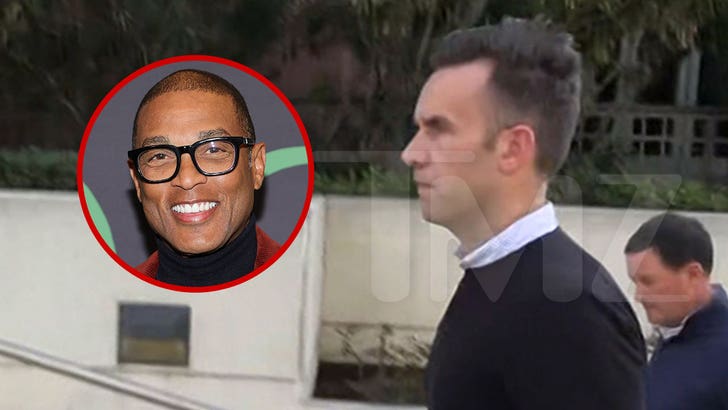
A judge released him without bail and ordered him to appear in Minnesota on Monday, with another court date set for February 9. He’s allowed to travel – even to France this summer for a boating trip with friends – as long as it doesn’t clash with court and he follows standard conditions.
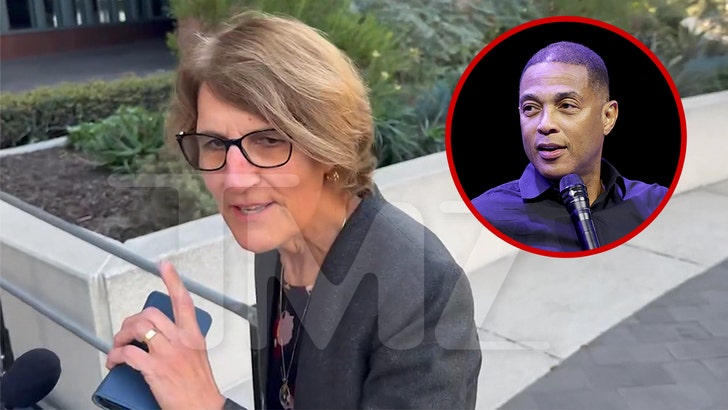
On the courthouse steps, Los Angeles Mayor Karen Bass drew a hard line between journalists covering a protest and protesters themselves, warning that if this can happen to one reporter, it can happen to any of them.
Don Lemon’s federal arrest after a Minnesota church demonstration is igniting alarm over press freedom, protest rights, and government overreach. Civil rights groups are sounding the alarm, and demanding answers. 📸: Getty Images
🔗: https://t.co/yndGSu82JO pic.twitter.com/WaX6MVibvf— Gayety (@gayety) January 30, 2026
Federal officials say Lemon was charged under a law involving interference with worship during that January church protest. In an official statement, U.S. Attorney General Pam Bondi claimed federal agents arrested Lemon and several others over a “coordinated attack” on the church.
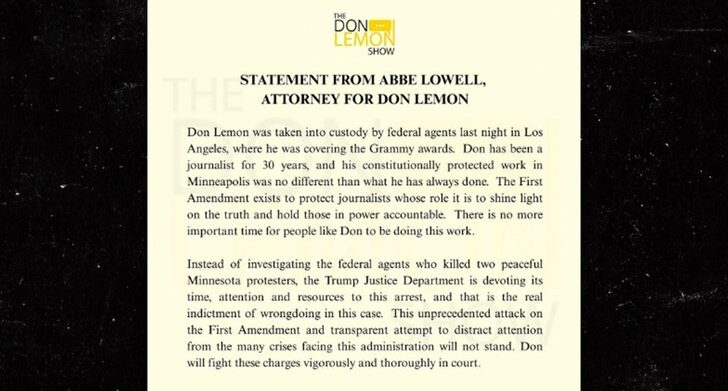
Lemon’s lawyer, Abbe Lowell, fired back, insisting Don was there as a journalist protected by the First Amendment and calling the arrest a distraction from the Trump administration’s handling of fatal encounters involving federal immigration agents in Minneapolis.
The Take
Strip away the white suit, the France trip, and the Grammys-adjacent timing, and this is the core question: Was Don Lemon covering a protest, or was he part of it?
Because how you answer that decides whether you see him as a reporter under fire – or a celebrity activist who crossed a legal line.
These days, journalists, especially the famous ones, aren’t invisible note-takers in trench coats. They’re brands. When someone like Lemon shows up at a charged event, the cameras don’t just cover the protest; they become part of it. That’s the tension sitting in the middle of this case.
Mayor Bass leaned hard into the “press freedom” frame: journalists here, protesters there, two separate categories. The Attorney General’s statement lumps everything together as a “coordinated attack.” Somewhere between those two narratives is what actually happened inside and around that church.
We’re replaying the 1960s press-freedom fights – only now the reporters have followers, sponsors, and stylists.
Lemon being released without bail matters. Judges don’t do that if they think someone is dangerous or likely to vanish on a yacht forever. Allowing him a future summer in France underscores that, whatever the rhetoric, the court doesn’t see him as a menace to society.
But the white suit, the wink, the overseas vacation carve-out – those details will drive his critics wild. They’ll say this is what happens when fame and politics mix: the consequences feel softer, the stage feels bigger, and the whole thing plays like a prestige drama about the brave anchor versus the big bad government.
On the other side, journalists are hearing one thing loud and clear: if a high-profile reporter can be arrested after a protest at a church, what does that mean for the freelancer with a borrowed camera, or the local TV reporter who doesn’t have a mayor or a star attorney in their corner?
This isn’t just about Don Lemon’s next court date. It’s about whether reporters feel safe standing between power and the people who are yelling at it.
Receipts
Confirmed
- Lemon appeared in a Los Angeles courtroom following his arrest tied to a January 18 anti-ICE protest at Cities Church in the Minneapolis-St. Paul area, based on court coverage and official statements.
- A judge released him without bail, ordered him to appear in Minnesota on Monday, and set another court date for February 9.
- The court is allowing him to travel, including a planned summer trip to France, as long as it does not conflict with court dates and he follows general conditions similar to probation-style restrictions.
- U.S. Attorney General Pam Bondi publicly stated that federal agents arrested Lemon and several others in connection with what she called a “coordinated attack” on Cities Church.
- Lemon’s attorney, Abbe Lowell, has said publicly that Lemon was present as a journalist and that his actions are protected by the First Amendment.
- Los Angeles Mayor Karen Bass spoke outside court, distinguishing journalists covering the protest from participants and warning that if this could happen to one reporter, it could happen to all.
- Lemon’s husband, Tim Malone, attended the hearing in person, offering visible but silent support.
Unverified / Contested
- Whether Lemon’s conduct legally qualifies as “interfering with worship” is very much in dispute and will be decided in court, not in the comments section.
- The Attorney General’s description of events as a “coordinated attack” reflects the government’s characterization and not an independently established fact pattern.
- Lowell’s claim that the arrest is a political distraction from other federal investigations is an allegation and a defense narrative, not a proven motive.
Backstory (For the Casual Reader)
For anyone who tuned out cable news drama a while ago: Don Lemon spent years as one of the most recognizable faces on CNN, anchoring primetime and later co-hosting a morning show before his high-profile exit in 2023. In 2024, he launched “The Don Lemon Show” online, positioning himself as an outspoken commentator on race, politics, and power. He’s been both praised and criticized for being blunt on air, and his off-duty moments – including memorable New Year’s Eve broadcasts – helped cement him as a pop-culture figure as much as a straight-news anchor. Lemon married real estate broker Tim Malone in 2024, making their united front at the courthouse another layer in an already very public life.
Now he’s not just a former cable news star trying to rebuild his platform – he’s the face of a fresh fight over how far journalists can go in the middle of America’s most explosive debates before the government slaps on handcuffs.
Sources
- Contemporaneous courtroom and courthouse coverage from a major entertainment news organization, published January 30, 2026.
- Public statement by U.S. Attorney General Pam Bondi regarding arrests linked to the Cities Church protest, delivered January 30, 2026.
- On-the-record comments from Don Lemon’s attorney, Abbe Lowell, made to assembled media on January 30, 2026.
Where do you draw the line between covering a protest and participating in it when the journalist is as famous as the story?


































Comments