

The Moment
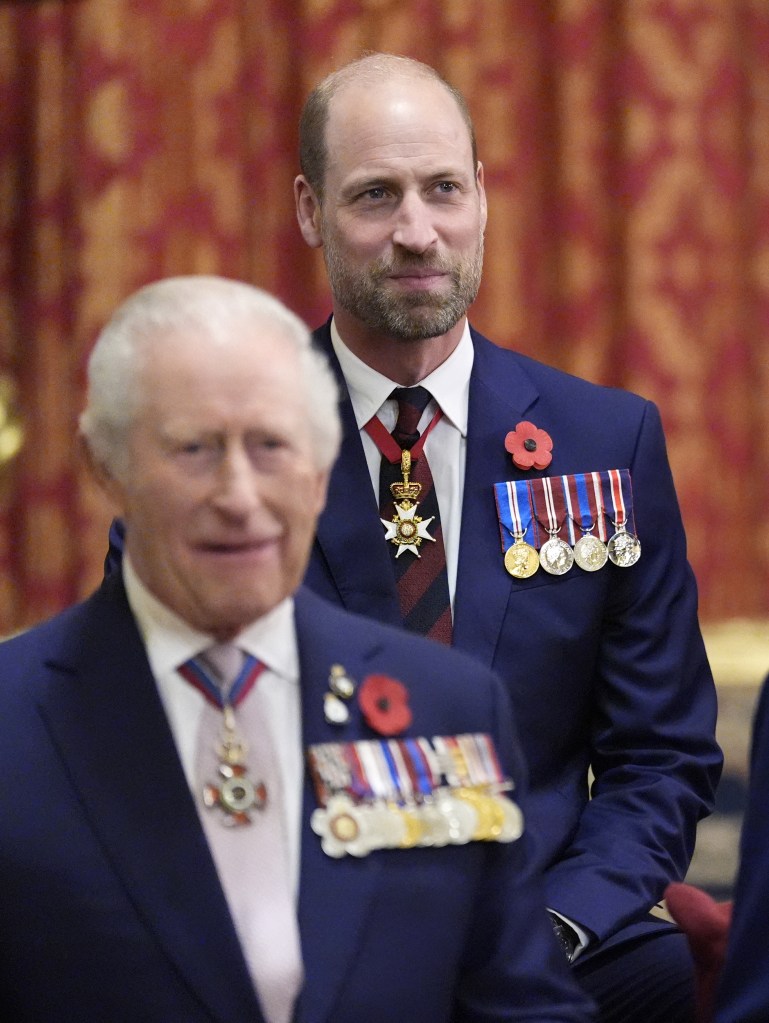
So apparently King Charles is not loving the constant background noise of, “Okay, but when does William take over?”
According to Us Weekly, as reported on Dec. 23, 2025, Charles has been “not thrilled” by speculation that Prince William is quietly running the show while the 77-year-old monarch undergoes cancer treatment. A source claims, “He doesn’t feel great about it, as he has finally attained the position he has waited for his whole life. Now that he’s king, everyone is focused on who will come next.”
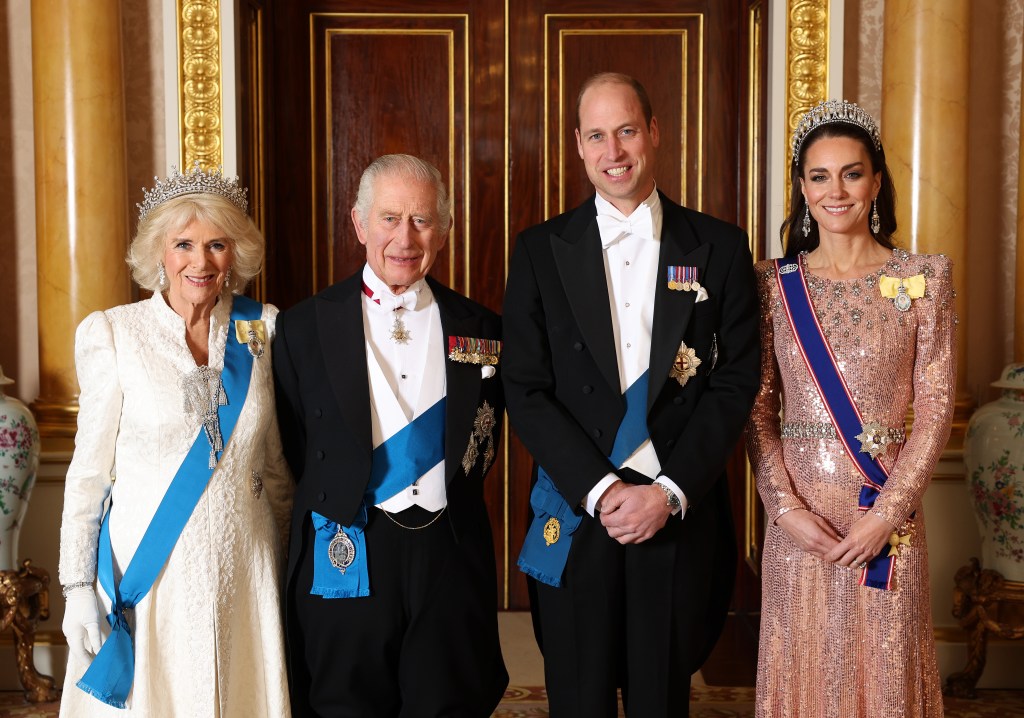
In the same report, insiders describe William as “strong-minded and stubborn” in royal matters, with he and Kate Middleton using their recent high-profile appearances – including a big state banquet – to project an image that “the monarchy is healthy regardless of what happens with the king.” Their eldest, Prince George, is said to be taking on more responsibilities, signaling that the next generation is already being eased into view.

A second source insists Charles hasn’t actually “relinquished” control. They say the king and his heir work closely together, that William respects his father’s decisions even when they disagree, and that Charles genuinely believes William will be an “incredible” king. At the same time, William is reportedly being deliberately framed in a more “serious” and “presidential” way as the palace “elevates” him in anticipation of what’s coming.
Layer on top of that talk of William and Kate planning to “completely modernize” the monarchy – with fewer working royals and “less drama” – and you have the royal version of a family business where the founder is still at his desk and the successor is already sketching new logos.
The Take
I don’t blame Charles for feeling a way about this. Imagine finally getting the promotion you’ve waited on since the 1950s, and the office group chat is already planning your retirement party.
Underneath the palace polish, this feels like a classic generational tension story: a late-in-life CEO who still wants to steer the ship, and an heir who’s being branded as the future in real time. The twist is that the “company” is a 1,000-year-old monarchy and the whole world is watching.
On one hand, it makes total sense the palace is leaning into William. Charles is in treatment. The institution hates a power vacuum. William, 43, is smack in that “solid middle age” lane and polls well with people who like their royals polished but not flashy. Showing him at state banquets with Kate in full tiara mode, and nudging George into more visible roles, signals continuity: don’t worry, the line of succession is intact and photogenic.
On the other hand, I get why Charles might feel sidelined. He spent his entire adult life being told he’d be king “one day” while being criticized for…well, everything. Now “one day” is finally here, and the narrative keeps shifting back to the next “one day” after him. It’s like he just got the stage and someone is already checking their watch for the encore.

As for William being “stubborn”? Honestly, would anyone prefer a wishy-washy future king? Royals are always described as “strong-minded” when it flatters them and “stubborn” when it doesn’t. The more interesting part is the talk of “completely modernizing” and downsizing: fewer working royals, fewer hangers-on, fewer headlines about distant cousins we only hear about when they’re in trouble. That actually tracks with what William and Kate have hinted at for years – a slimmer, more professional “Firm.”
The real tension isn’t villain-versus-hero; it’s pace. Charles seems to want his reign to be its own chapter, not just a slow ramp to William. William and Kate, meanwhile, are already being staged like the coming attraction. It’s less a coup and more an awkward overlap, like when the new show starts promoting itself during the final season of the current one.
Receipts
Confirmed:
- Charles became king in September 2022 after Queen Elizabeth II’s death and publicly disclosed a cancer diagnosis the following year, according to official palace statements and widely reported coverage at the time.
- In a recent health update earlier this month, Charles said his cancer treatment schedule could be reduced in the new year due to early diagnosis, effective treatment, and following doctors’ orders, per comments cited in the reporting.
- Page Six reported on Dec. 23, 2025, that Us Weekly sources claim Charles is “not thrilled” about speculation William is effectively running things during his treatment.
- The same piece notes a second source saying Charles has not relinquished control, that William has his own staff and office, and that the two work closely together.
- Representatives for William and Charles did not respond to requests for comment, according to Page Six.
Unverified / Reported-Only:
- That Charles “doesn’t feel great” about public focus on William’s future reign is based on anonymous sources speaking to Us Weekly, as summarized by Page Six. This has not been confirmed by the palace.
- Descriptions of William as “strong-minded and stubborn,” his “presidential” presentation, and the claim that the palace is “consciously elevating” him are all sourced to unnamed insiders.
- The idea that William and Kate will “completely modernize” the monarchy, including downsizing to “less people, less drama,” is framed as their future plan by those same anonymous sources.
Backstory (For Casual Readers)
If you haven’t been following every twist of royal musical chairs: Charles waited longer than any heir in modern history to become king. He finally took the throne in 2022 after Queen Elizabeth II died at 96. His eldest son, Prince William, became Prince of Wales – the traditional title for the next in line.
Since then, the monarchy has been trying to steady itself through a rough few years: Queen Elizabeth’s death, ongoing dramas involving Prince Harry and Meghan Markle, and Charles’ cancer diagnosis. William and Kate have taken on a bigger public role, often positioned as the “modern” face of the institution, with their children – especially Prince George – gently introduced as the future of the future.
All of that means the spotlight doesn’t just land on the king anymore; it jumps ahead to the next reign, whether he likes it or not.
What’s Next
Short term, all eyes stay on Charles’ health updates and workload. If his treatment can be reduced, as he recently suggested, we may see him take on more high-profile duties again – which could quiet some of the “Is William secretly in charge?” talk.
At the same time, it’s hard to imagine the palace suddenly hiding William and Kate in the attic. Expect more of this careful dual-track strategy: Charles at the center of the traditional, ceremonial moments; William and Kate front and center on the “new monarchy” themes – streamlined, modern, less scandal-prone (in theory).
The big storyline to watch is how quickly that modernizing agenda actually hits the ground. Do we see fewer working royals on the balcony? A more corporate-style royal operation with a smaller inner circle? Or does the institution, as it so often does, move at a glacial pace while still talking like it’s ready for a makeover?
Either way, the emotional piece is hard to miss: a man in his late 70s trying to hold onto the role he waited a lifetime for, while the next generation is being framed for its close-up. Somewhere between those two realities, the future of the crown is being quietly negotiated over family dinner.
How much should the palace lean into “the next king” while the current one is still very much on the throne – does the balance feel respectful to you, or a little too eager?














































Comments