


Ryan Murphy’s latest true-tragedy remix turns a documented plane crash and a famously complicated marriage into a shampoo commercial with better lighting.
The new limited series “Love Story: John F. Kennedy Jr. & Carolyn Bessette” is beautiful to look at and hollow where it matters. It rewrites history, blames the woman for the crash she died in, and treats Jackie Onassis like a bit player in her own legacy.
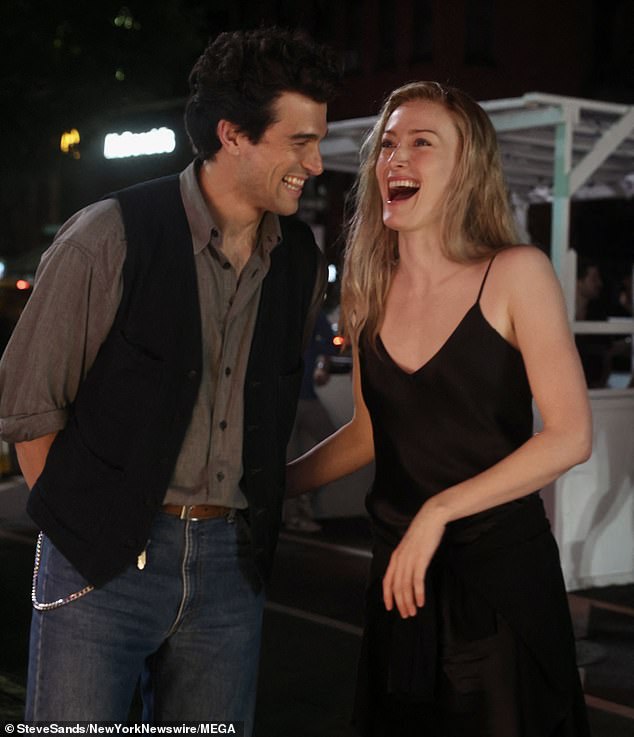
We’re not talking about quibbling over hemlines here. We’re talking about taking a very public, very investigated aviation disaster and bending it into a jealous-wife nail appointment.
The Moment
Murphy’s show arrives as a high-gloss, prestige-packaged “love story” about America’s reluctant prince and the Calvin Klein muse who married him. It promises intimacy, tragedy, and answers about what really happened between John F. Kennedy Jr. and Carolyn Bessette-Kennedy.
Instead, it serves up a fan-fiction version of their last night alive. On screen, Carolyn allegedly makes a diva detour for a nail redo, delaying their takeoff, pushing John into flying after dark, and, by implication, sending them toward the Atlantic.
The series also soft-focuses their marriage into a sad-but-soulmate arc, hinting at reconciliation and deep, unspoken devotion right before the crash. That might make for a moving monologue; it does not line up cleanly with what friends, staffers, and biographers have said for years about how strained things really were.
And then there’s Jackie. The show gives us a lonely, tipsy Jackie O, mooning over the husband who publicly humiliated her and left her to grieve a stillborn child largely alone. The woman who reinvented herself as a serious New York book editor is flattened into a tragic, slightly sloppy relic of Camelot.
The Take
I like a good melodrama as much as anyone who survived the 80s. But there’s a difference between dramatizing a story and distorting the record, especially when people actually died, in front of the whole world, with an official investigation and grieving families still around.
The most galling choice? That petty-princess manicure setup. The idea that Carolyn’s vanity forced John to fly in unsafe conditions has floated around tabloids and gossip books for years. It has never been confirmed by the people who matter: investigators or primary witnesses.
Turning a documented aviation tragedy into a jealous-wife nail appointment isn’t storytelling; it’s character assassination.
Murphy doesn’t have to make a courtroom exhibit. But when you present a blow-by-blow of the final hours as if it’s emotionally true, while leaning on an old misogynistic trope-high-maintenance wife, long-suffering golden boy-you’re not just embellishing. You’re saying Carolyn earned the blame that the NTSB put squarely on the pilot’s shoulders.
The show also seems more obsessed with Caroline’s hair and handbag inventory than with her inner life. Early chatter around promotional stills fixated on whether her sneakers were too cheap, whether the Birkin was the right size, and whether the highlights were 2020s-Instagram instead of 1990s-minimalist. The production reportedly scrambled with fashion consultants and colorists to fix it all.
But perfecting the blowout while sanding off the messy truth is backward. Carolyn was not some languid ice queen floating through downtown in a slip dress. She chased John hard; she tolerated humiliations and public screaming matches; she worked at that “effortless” look like it was a second job. She was ambitious, insecure, furious, and funny. She was not a hologram in a cream turtleneck.
Then there’s John. The series gives us the familiar poster: shirtless bike rides, soulful silences, the prince who just wanted a normal life. What it shrinks is the other half of his reputation – a man who pushed risk, who kept flying when he was under-trained, who reportedly scared the women who loved him with his recklessness long before that final flight.
Is that comfortable to watch? No. But if you’re going to dramatize this couple’s last days for millions, you owe viewers more than a perfume ad with a plane in the background.
And Jackie? Making her a tipsy Greek chorus for her son’s drama reduces one of the most scrutinized, self-reinventing women of the 20th century to a meme. This is someone who weathered infidelity, assassination, public scrutiny, widowhood, and an entire second act in publishing. She deserved better than a stray “anyways” and a wine glass.
Murphy has built an empire on turning true stories into operatic TV. Sometimes it works. Here, it feels like he’s repainting the Titanic in millennial pink and calling it a rom-com.
Receipts
Confirmed by official records or primary sources
- Cause of the crash: A 2000 National Transportation Safety Board (NTSB) report on the July 16, 1999, crash that killed John F. Kennedy Jr., Carolyn Bessette-Kennedy, and Lauren Bessette concluded that the probable cause was pilot error, specifically, spatial disorientation in night conditions over water. The report did not blame passenger behavior or a late departure.
- Pilot qualifications: The same NTSB report notes that Kennedy was not yet certified for instrument-only flight, had relatively limited experience flying at night, and had not filed a detailed flight plan with air traffic control for the trip to Martha’s Vineyard.
- Seating in the aircraft: Accident documentation describes Carolyn and Lauren seated in the rear of the Piper Saratoga, facing aft, with their backs toward the cockpit-very different from the cozy, face-to-face framing often seen on screen.
- Marital strain: Multiple biographical accounts and interviews with friends have described John and Carolyn’s relationship in 1998-99 as strained and volatile, with reports of counseling and talk of separation. No divorce filing was ever made public before their deaths.
- Jackie’s second act: After Aristotle Onassis’s death, Jacqueline Kennedy Onassis worked for years as a book editor in New York, acquiring and shepherding serious nonfiction and literary projects. Former colleagues have consistently described her as disciplined, private, and professionally focused-not a socialite in exile.
Reported, disputed, or unverified
- The “manicure delay” story: The claim that Carolyn insisted on redoing her manicure on the day of the crash, causing a late takeoff and indirectly contributing to unsafe conditions, has circulated in gossip reporting and some secondary books. It has never appeared in the NTSB findings or other official documentation and remains unverified.
- “On the verge of divorce” vs. “secret reconciliation”: Some friends and biographers have characterized John and Carolyn as close to separating before the crash. Others recall moments of renewed closeness. There is no definitive public record proving either a formal separation plan or a last-minute reconciliation.
- John’s alleged “death wish” and pressuring partners to take risks: Several books and interviews over the years have quoted acquaintances describing Kennedy as unusually drawn to risk, especially in flying and outdoor sports, and recounting incidents where girlfriends felt frightened by his daredevil streak. Those are personal recollections, not clinical findings, and should be read as such.
- Claims about Jackie being “forcibly institutionalized” by JFK: Some biographical works have alleged that President Kennedy and his circle responded to Jackie’s distress during the marriage with aggressive medical interventions, including stays in clinics. These accounts are contested among historians and rely heavily on second-hand testimony.
Backstory (For the Casual Reader)
If you lived through the 90s, you remember the arc even if the details are fuzzy. John F. Kennedy Jr., son of a slain president, law-school grad, magazine founder, perennial “Sexiest Man Alive” fodder, spent most of his adult life trying and failing to look like a man, not a myth.
In 1996, he married Carolyn Bessette, a PR exec from Calvin Klein with a clean, almost severe style that launched a thousand mood boards. The press painted her as an ice-cool fashion sphinx. Friends described a much more complicated woman: funny, volatile, overwhelmed by fame, and deeply ambivalent about the circus that came with her husband’s last name.
The marriage was rocky, with fights in public, therapy, and endless paparazzi stakeouts. On July 16, 1999, John piloted a small plane with Carolyn and her sister Lauren on board, headed to a family wedding on Martha’s Vineyard. They never arrived. The crash dominated television and front pages for days; the investigation that followed was exhaustive, public, and specific.
Jacqueline Kennedy Onassis, who had died five years earlier, hovered over all of this even in absence. Her careful remaking of herself-first as a guarded widow, then as a working editor-set a template for how to survive fame and tragedy that her son and daughter-in-law never really had time to follow.
Which is why, a quarter-century later, how we retell their story matters. Are we interrogating the myth, or just polishing it for streaming?
Your turn: When real people die in highly public tragedies, where do you think the line should be between creative license and staying faithful to the documented record? Would you watch this series, or skip it on principle?
Sources:
- National Transportation Safety Board, Aircraft Accident Report AAR-00/03 on the July 16, 1999, crash of John F. Kennedy Jr.’s Piper Saratoga, published July 7, 2000.
- Steven M. Gillon, America’s Reluctant Prince: The Life of John F. Kennedy Jr., 2019.
- RoseMarie Terenzio, Fairytale Interrupted: A Memoir of Life, Love, and Loss, 2012.
- Barbara Leaming, Jacqueline Bouvier Kennedy Onassis: The Untold Story, 2014.























































Comments