

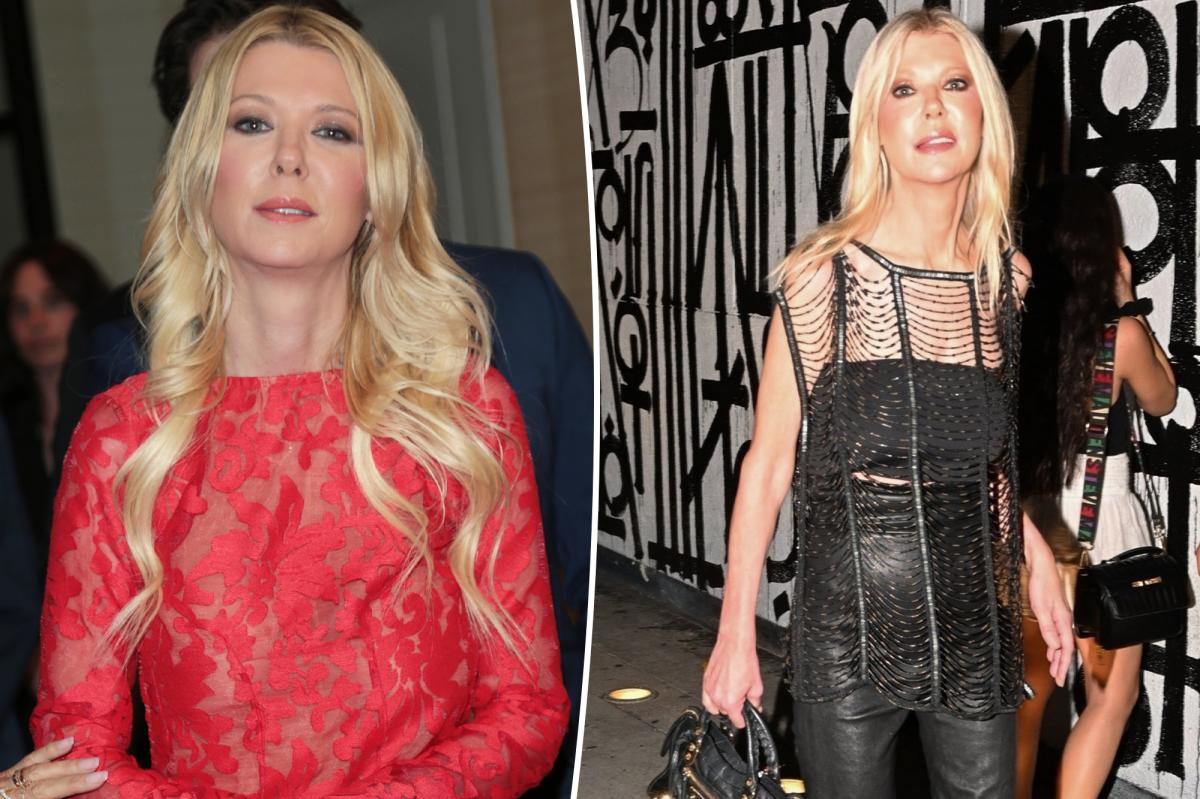
The Moment
Tara Reid says she was drugged. Police say they can’t prove it. And in the middle of that gap is a 50-year-old actress who is now begging people to stop turning her worst night into a punchline.
Here’s what we know: In late November, Reid was at a hotel bar in Rosemont, Illinois, near Chicago. Security footage later showed her in a wheelchair in the lobby, then being taken out on a stretcher to the hospital. She says she remembers having one drink, going outside for a cigarette with a man she’d just met, and then waking up in a hospital hours later.
On Dec. 11, according to a Rosemont police spokesperson quoted in multiple reports, the investigation into her alleged drugging was officially closed. Police said they found no evidence of a crime after reviewing the footage they had. They confirmed that a bartender covered her drink when she left the bar – which they called standard practice.
Reid, meanwhile, is devastated. In a statement shared with outlets this week, she called the situation “truly heartbreaking,” saying that people are “twisting reality” and that the online bullying about the incident is affecting her mental health.
The Take
Let’s be honest: Tara Reid has been an easy tabloid target for more than two decades. So now, when she says she was drugged, a lot of people are skipping the empathy and going straight to the eye-roll. That tells us as much about us as it does about her.
Police closing a case is not the same thing as announcing someone lied. It just means they don’t have enough evidence to move forward. That’s it. But online, nuance lasts about four seconds. The headline becomes: No crime, Tara overreacted.
Reid says there are 33 minutes of missing footage and insists the security video actually shows her barely touching her wine. Police, for their part, say there are stretches of time not covered on camera and that all they can do is review what exists. It’s like trying to solve a jigsaw puzzle when half the pieces fell behind the couch.
Here’s where I land: you can acknowledge that investigators didn’t find proof and still resist turning a woman’s frightening hospital trip into comedy content. She woke up after roughly eight to eleven hours in a hospital, insists she hadn’t mixed meds and booze, and now says she’s afraid to leave the house because of the backlash. That is not some fun “celebrity mess-up” moment; it’s a health scare and a reputational hit rolled into one.
We’re also watching the usual Tara Reid double standard. A male actor in his 50s saying, “I don’t remember anything after my first drink” in a situation like this would likely get more concern than memes. With Reid, there’s a long shadow of old party-girl headlines, and suddenly a lot of people think they know exactly what happened in a hotel bar they were nowhere near.
You can believe her fully, partially, or not at all. But at minimum, maybe we retire the reflex to mock any time a woman with a messy past says, “Something wasn’t right.”
Receipts
Confirmed:
- Rosemont, Illinois police closed their investigation on Dec. 11, saying they found “no criminal act” based on the available evidence, according to a police spokesperson quoted in multiple outlets.
- Police said a bartender covered Reid’s drink when she left the bar, describing it as standard bar practice.
- Security footage shows Reid in a wheelchair in the hotel lobby and later being removed on a stretcher to the hospital.
- Reid has publicly stated she does not remember anything after her first drink and says she spent hours in the hospital.
- She has said the coverage and public reaction are harming her mental health and making her afraid to leave her home.
Tara Reid’s allegations of drugging aren’t necessarily false, but right now cops say their investigation’s hit a dead end … and they don’t have any evidence to support the claims.
Read more: https://t.co/FKwC66nD9J pic.twitter.com/qDBQwVeVzx
— TMZ (@TMZ) December 18, 2025
Unverified / Disputed:
- Reid’s allegation that she was drugged; police say they found no evidence to support the claim but have not called it false.
- Her claim that about 33 minutes of surveillance footage from the incident are unaccounted for.
- Her description that she only took one sip of wine in over 30 minutes and barely touched her drink before blacking out, which is based on her interpretation of the footage.
Sources referenced in reports include Tara Reid’s own statements, comments from a Rosemont, Illinois police spokesperson as summarized in national entertainment coverage, and prior interviews Reid has given describing the night and its aftermath.
Backstory (For Casual Readers)
If you mostly know Tara Reid as the blonde from “American Pie” or the wild best friend in “Van Wilder,” here’s the quick refresher. She became a big deal in the late 1990s and early 2000s, then slid into that uncomfortable Hollywood category: the woman everyone loves to label a “train wreck.” Party photos, wardrobe malfunctions, reality TV stints, and later those campy “Sharknado” movies all turned her into more of a punchline than a performer in the public eye.
Because of that history, any story about her and alcohol gets filtered through old gossip. That’s why this latest situation hits differently. Instead of people asking, “What if she was drugged?” a chunk of the internet jumped straight to, “Here she goes again.”
What’s Next
Legally, unless new evidence appears, this might be the end of the road. Police have closed the case and said they can only act on what they can see and verify. No charges, no suspects, no follow-up investigation on the books.
For Reid, though, this probably is not over. She could push for additional footage, consult lawyers about any possible civil steps, or simply continue telling her story publicly in an effort to reclaim the narrative. At the very least, I’d expect more detailed interviews where she walks through the night and the aftermath in her own words.
The bigger question is cultural: will we treat this as one more “celebrity meltdown,” or as a cautionary tale about how quick we are to laugh when a woman says she felt unsafe? Cases close. Reputations don’t recover nearly as fast.
Your turn: When police say there’s no evidence but the person involved says they were harmed, how do you personally decide what to believe – and how loudly to talk about it online?






















































Comments