

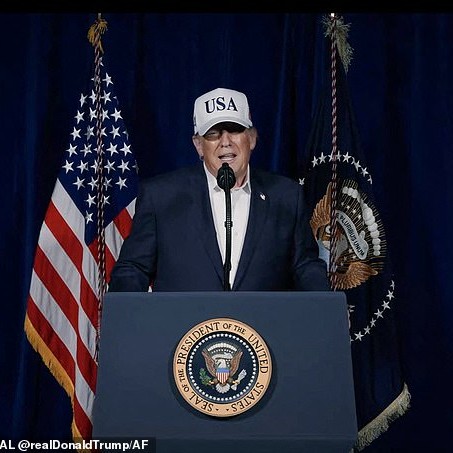
President Donald Trump announced on Truth Social that Iran’s Supreme Leader, Ayatollah Ali Khamenei, is dead after U.S.-Israeli strikes. He urged Iranians to rise up and vowed more bombing. The message? Part battlefield bulletin, part broadcast spectacle-and all consequences.
However you rate the rhetoric, the facts still have seams: images and official statements point one way, but independent confirmation from Tehran and a clear succession path aren’t locked in yet.
The Moment
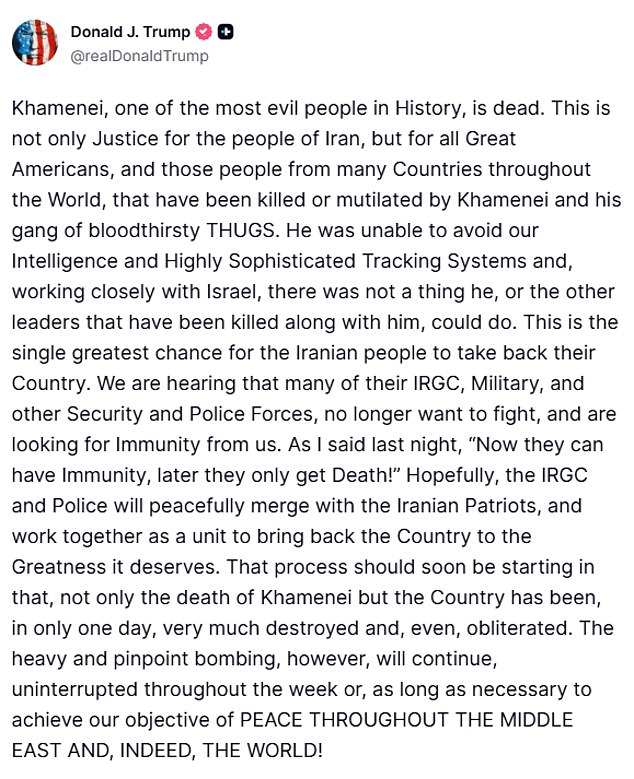
On Feb. 28, 2026, Trump posted on his official Truth Social account that Khamenei, who led Iran for more than three decades, was dead after coordinated strikes. He praised “highly sophisticated tracking” and said operations would continue “as long as necessary.”
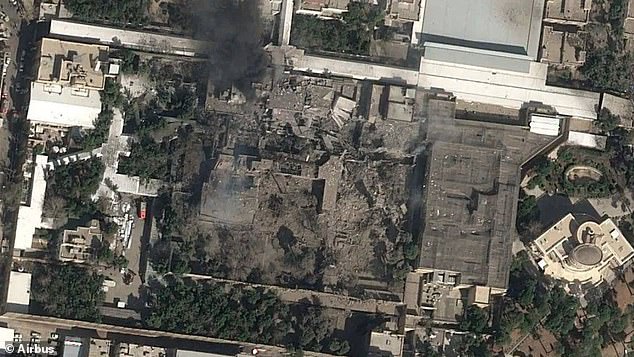
Public statements from Israeli officials the same day echoed the claim that Khamenei had been killed. Meanwhile, widely circulated satellite images showed dark plumes and heavy damage at a compound associated with the supreme leader in Tehran.
Trump also used the announcement to exhort Iranians to “take back their country,” and later quipped in a televised interview that he might even be asked who should lead Iran next, adding he was “a little sarcastic,” which did not exactly quiet the record-scratch moment.
The Take
This is what happens when statecraft collides with showcraft. A president delivering a death announcement via social platform isn’t new-what’s new is the unmistakable promo energy. You could almost hear the stinger: new episode drops tonight, more to come this week.
There are two realities to hold at once. First: If Khamenei is indeed dead, it’s a once-in-a-generation rupture inside the Islamic Republic. Succession was always the regime’s most fraught chapter; turning that page under airstrikes is a whole new genre. Second: The fog around verification, chain of command, and next steps is thick. In that fog, markets twitch, proxies react, and nervous neighbors stock the panic room.
Trump’s instinct is to seize narrative territory fast and loud. It works until it doesn’t. Because even when the battlefield favors the bold, governance favors the boring-the confirmations, the briefings, the line-by-line clarity that turns heat into light.
“Announcing a regime-shaking death like a cliffhanger gets clicks; it doesn’t resolve the plot.”
Expect a hard pivot from spectacle to spreadsheets: succession mechanics, clerical blocs, the Revolutionary Guard’s leverage, and how regional capitals recalibrate. The Middle East rarely obeys tidy scripts, and this one reads more like a writer’s room full of rival showrunners.
Receipts
Confirmed
- Trump stated on his official Truth Social account (Feb. 28, 2026) that Khamenei is dead and said strikes would continue.
- Trump, in a televised interview aired the same day, joked about being asked who should lead Iran, adding he was “a little sarcastic.”
- Commercial satellite images circulated by major broadcasters and wire services (Feb. 28-Mar. 1, 2026) show significant damage and smoke at a Tehran compound tied to the supreme leader.
- Israeli government spokespeople publicly asserted that Khamenei had been killed on Feb. 28, 2026.
Unverified / Developing
- Independent, on-the-record confirmation from Iranian state authorities of Khamenei’s death.
- The full list of senior Iranian figures reportedly killed alongside Khamenei.
- The precise mechanics of U.S.-Israeli operational coordination and timelines.
- Who will lead Iran next? Several names are floated, but no official designation.
Backstory (For the Casual Reader)
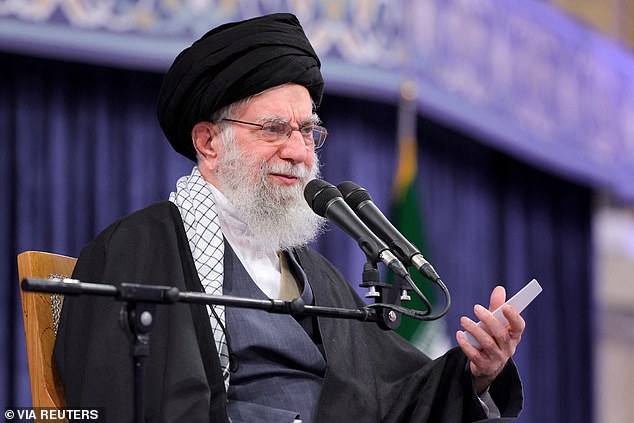
Ali Khamenei, 86, became Iran’s supreme leader in 1989 after Ayatollah Khomeini. Under his rule, Tehran deepened ties to regional proxy forces (from Lebanon to Yemen) and weathered sanctions, cyber operations, and covert clashes with the West. The office of the supreme leader outranks Iran’s president and parliament; succession traditionally runs through the Assembly of Experts, a clerical body that names the next leader. In recent years, observers often mentioned Mojtaba Khamenei (the supreme leader’s son, a powerful cleric with no elected office) and veteran insider Ali Larijani (former parliament speaker and security official) as potential players – names that still surface now, with the caveat that the facts are moving, and some contenders may have been caught in the same strikes.
One tasteful question: If leaders insist on breaking world news straight to their feeds, what balance do you want from them-urgent transparency, or measured confirmation first?
Sources
- Official statements and posts from the presidential Truth Social account (Feb. 28-Mar. 1, 2026).
- On-camera remarks by President Trump in a nationally televised network interview (Feb. 28, 2026).
- On-record statements from Israeli government spokespeople (Feb. 28, 2026).
- Commercial satellite imagery of the Tehran leadership compound circulated by major broadcasters and photo agencies (Feb. 28-Mar. 1, 2026).











































Comments