

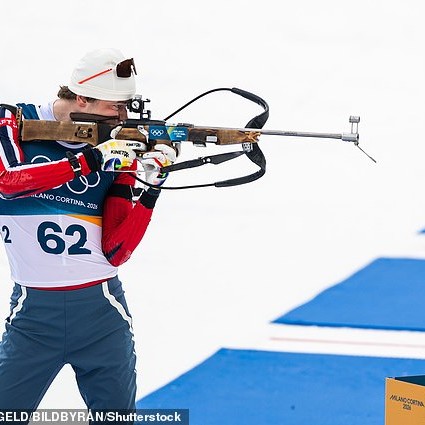
He won an Olympic bronze, confessed to cheating on live TV, and hoped for a love-story ending. His girlfriend’s answer? Not exactly a standing ovation.
Sports romance fans wanted a Hollywood climax. What they got instead was a very modern reality check: the woman at the center of Sturla Holm Lgreid’s big, tear-streaked apology never asked to be a character in his redemption arc – and she still is not ready to forgive him.
There is a difference between being vulnerable and putting someone on blast for ratings. This saga is a case study in what happens when a private betrayal gets turned into a public performance without the other person’s consent.
The Moment
On Tuesday in Milan-Cortina, 28-year-old Norwegian biathlete Sturla Holm Lgreid won bronze in the men’s 20km individual event at the Winter Olympics. It should have been a straight-up celebration: skis, rifle, national anthem, happy tears.
Instead, during his post-race interview with Norwegian broadcaster NRK, he detonated what he himself called a metaphorical “nuclear bomb.” According to that on-air interview, he admitted he had cheated on his girlfriend of six months three months earlier and framed it as the “biggest mistake” of his life. He choked up, called her the love of his life, and said, “I had a gold medal in my life… I only have eyes for her.”
Olympic medalist confesses to cheating on girlfriend in wild interview https://t.co/zuoXUVpgdy pic.twitter.com/Zao0vHeoVH
— For The Win (@ForTheWin) February 10, 2026
He also admitted he wasn’t sure what he was trying to achieve by saying it, beyond a desperate hope that she would see his confession, understand how much he loves her, and maybe take him back. Think Jerry Maguire, but on a snow-covered shooting range and with global cameras rolling.
The Take
Let’s say the quiet part out loud: dropping a surprise cheating confession into a victory interview is not romance, it is pressure.
Yes, Lgreid is clearly shattered by what he did. The tears looked real. The regret sounded raw. But the grand gesture was aimed through a TV lens, not across a kitchen table. That matters.
Public remorse does not erase private damage, and it definitely does not earn automatic forgiveness.
His girlfriend – who has chosen to stay anonymous – didn’t sign up for this soap opera. Yet overnight, she became the invisible woman everyone was talking about. He gets sympathy shots of him sobbing in a stadium jacket; she gets to explain her pain to family, friends, and a suddenly curious nation.
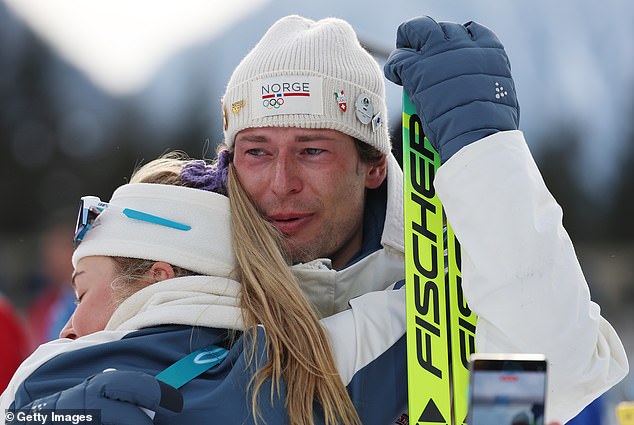
In her brief statement, she keeps it calm and painfully clear: she is hurt, she did not choose this spotlight, and “it’s hard to forgive.” That is the most adult sentence in this entire story. While he talks about revelations and nuclear bombs, she is reminding us that healing is not a TV moment; it is a boundary.
Culturally, we love a redemption tour. Athlete messes up, cries on camera, vows to be better, cue swelling music. But this isn’t a missed shot or a bad season. This is another person’s trust, body, and emotional safety. You do not fix that with a medal around your neck and a camera in your face.
At best, his confession is a clumsy attempt to own what he did and show he is not hiding. At worst, it is using the power of a global stage to corner someone into either forgiving you or looking “cold” for not playing along. Her refusal to give him that instant, public absolution is not cruel. It is self-respect.
Receipts
Confirmed (from Norwegian broadcaster NRK’s post-race interview and Norwegian newspaper VG’s reporting and published statements in February 2026):
- Lgreid won bronze in the men’s 20km individual biathlon event at the 2026 Winter Olympics in Milan-Cortina.
- In his televised interview with NRK, he said he met his girlfriend six months earlier and cheated on her three months ago, calling it his “biggest mistake.”
- He referred to her as “the love of my life” and said, “I had a gold medal in my life… I only have eyes for her.”
- He told NRK he had decided the night before the race to “drop this bomb” in the interview and described it as having “nothing to lose.”
- His girlfriend, remaining anonymous, released a statement saying, “It’s hard to forgive,” and that she did not choose to be put in this position, thanking family, friends, and others for their support.
- After her response, Lgreid issued another statement expressing regret that he brought up such a personal story on what he called a joyous day for Norwegian biathlon and said he was not thinking clearly.
- Teammate Johannes Dale-Skjevdal confirmed on Norwegian TV that the team had known about the infidelity beforehand and that Lgreid had spoken to him about it.
Unverified:
- Whether this public confession will influence the future of the relationship, neither party has said they are reconciling.
- Social media reactions describing him as either heroic or foolish reflect fan opinion, not measurable fact.
- Any deeper motives beyond what Lgreid himself has stated (such as seeking public sympathy) remain speculative and should not be assumed.
Backstory (For the Casual Reader)
If you have not followed biathlon since your kids aged out of snow days, a quick primer: it is the winter sport where athletes ski long distances and stop at a shooting range in between laps, balancing brutal cardio with laser focus. Norway is a powerhouse in the sport, and Sturla Holm Lgreid has been one of its notable names on the World Cup circuit.
According to recent coverage of this Olympic season, Lgreid had a rough year competitively and was even dropped from Norway’s mixed relay lineup. Going into Milan-Cortina, he called himself an underdog and said he did not have high expectations. Then he pulls off a clutch performance, hits 19 of 20 shots, and slips onto the podium for his first Olympic bronze.
That should have been the headline: comeback bronze, under-pressure athlete delivers when it counts. Instead, the race became the backdrop for a very public confession about a very private failure. Now, his medal moment is permanently linked to a relationship crisis that may or may not survive – and that is as much a cautionary tale as it is a love story.
So here is the uncomfortable truth: sometimes the bravest thing is not the dramatic microphone moment. It is sitting with the shame, doing the work quietly, and letting the person you hurt decide if they ever want to share a spotlight with you again.
Where do you draw the line between a heartfelt public apology and emotional pressure – and would this stunt make you more likely to forgive, or less?



































































Comments